2026-08-20 · David Harlan
Pressure Washing Commercial Parking Lots in Charlotte After Spring Pollen
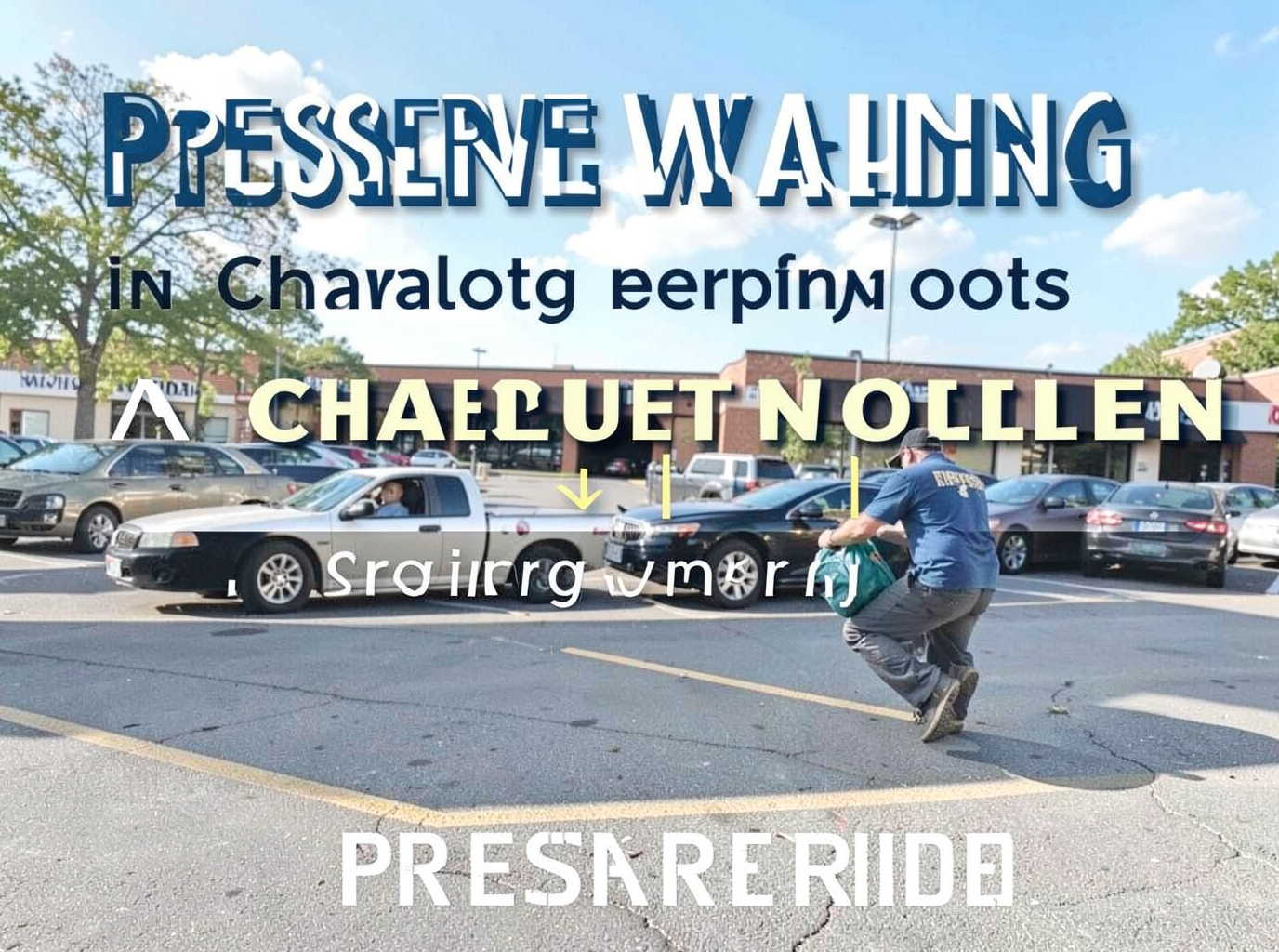
After spring pollen coats commercial parking lots across Charlotte, effective pressure washing restores traction and appearance in 3-6 hours for a typical 20,000-square-foot lot when crews use 3,500-4,000 PSI hot water units and a mild alkaline detergent applied at 1:10 dilution.
Spring Pollen Challenges in Mecklenburg County
Charlotte's humid subtropical climate produces heavy pine and oak pollen from March through May that settles on asphalt and concrete in Uptown Charlotte, Dilworth and South End. The fine yellow powder mixes with vehicle oils and road dust, creating a slippery layer that standard rinsing cannot remove. Commercial lots near Bank of America Stadium and Spectrum Center see extra buildup because of constant traffic and limited shade. Crews must pre-treat with detergent for 10-15 minutes before washing to break the film without etching the surface. Nearby areas such as Mint Hill and Stallings experience similar pollen loads but often have more open lots that dry faster after washing.
Site Assessment for Lots in South End and Ballantyne
Before starting, walk the lot to note drain locations, expansion joints and any sealed sections common in newer Ballantyne developments. Older asphalt in Plaza Midwood and Elizabeth can soften under prolonged hot water exposure, so operators reduce dwell time and keep wand movement steady. Check for oil stains near loading docks that require a separate degreaser pass. Measure square footage accurately because quotes are based on actual surface rather than vehicle count. This step prevents callbacks when pollen residue remains in low spots around Freedom Park or the Bechtler Museum of Modern Art area.
Equipment and Detergent Choices for Pollen Removal
Use a trailer-mounted hot water unit rated at least 8 GPM to keep up with large commercial surfaces. Pair it with a 25-degree green tip for broad coverage and switch to a 15-degree tip only for stubborn edges. Apply an eco-friendly surfactant designed for pollen rather than heavy grease formulas. Rinse from the highest point toward drains to avoid pushing debris into adjacent sidewalks in NoDa or Myers Park. Maintain 18-24 inches of standoff distance on asphalt to prevent aggregate loss. These settings remove the pollen film in one pass while protecting the lot surface.
Timing Work Around Charlotte Weather Patterns
Schedule jobs between 8am and 2pm on days when humidity stays below 70 percent so surfaces dry before evening traffic. Mild winters leave residual moisture in the base material, so avoid washing immediately after rain. Hot summer temperatures later in the year can cause rapid drying that leaves detergent spots, making spring the ideal window. Crews typically finish before the business opens or during low-traffic Saturday mornings within the Mon–Fri 8am–6pm and Sat 9am–2pm schedule.
Post-Wash Care and Related Building Maintenance
After washing, apply a light sealant only if the lot shows aggregate exposure; most Charlotte commercial surfaces need it only every 8-12 years. Sweep loose debris weekly to slow pollen re-accumulation. Building managers often pair exterior work with interior services such as air duct cleaning to remove any pollen tracked inside and dryer vent cleaning to maintain airflow in connected retail spaces. These steps keep the property clean longer without overlapping the pressure washing scope.